Research projects

Practical innovation.

Our projects combine scientific questions with practical application – together with partners from Chemnitz and Saxony, for technology that really helps.

online Orbis Humanica: cultural history on the map

Orbis Humanica: cultural history on the map

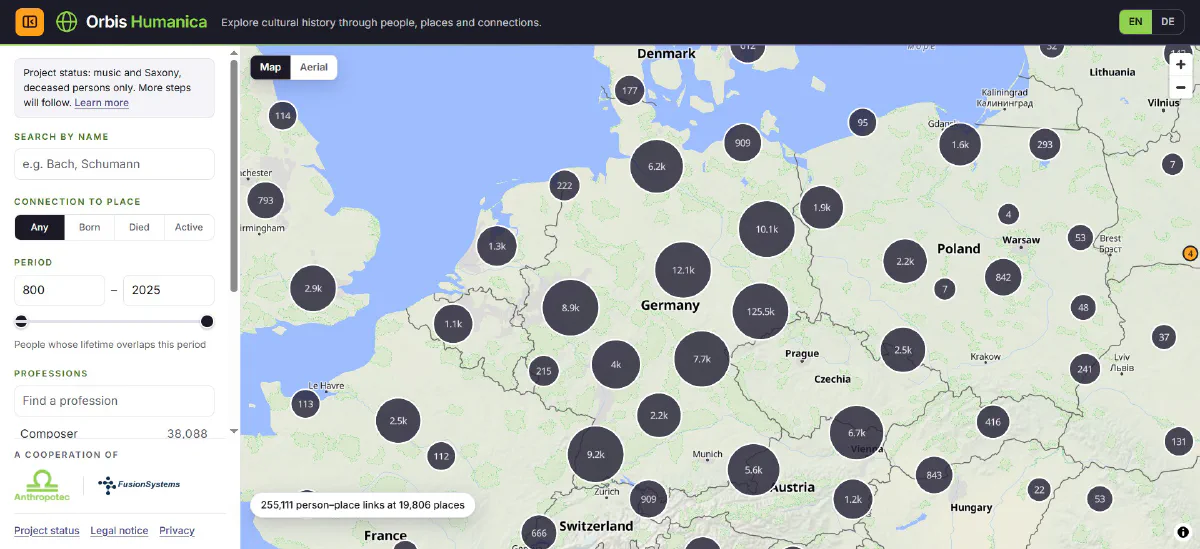
Where was a composer born, where did a cantor work, and who lived in the same place at the same time? Orbis Humanica answers such questions on a map. The platform makes accessible the Integrated Authority File (GND) of the German National Library – the register that libraries, archives and museums in the German-speaking world use to name people and places unambiguously.

GNDAuthority dataDigital humanitiesMusic historyOpen data

View project →

ongoing AI-assisted transcription of historical printed works

AI-assisted transcription of historical printed works

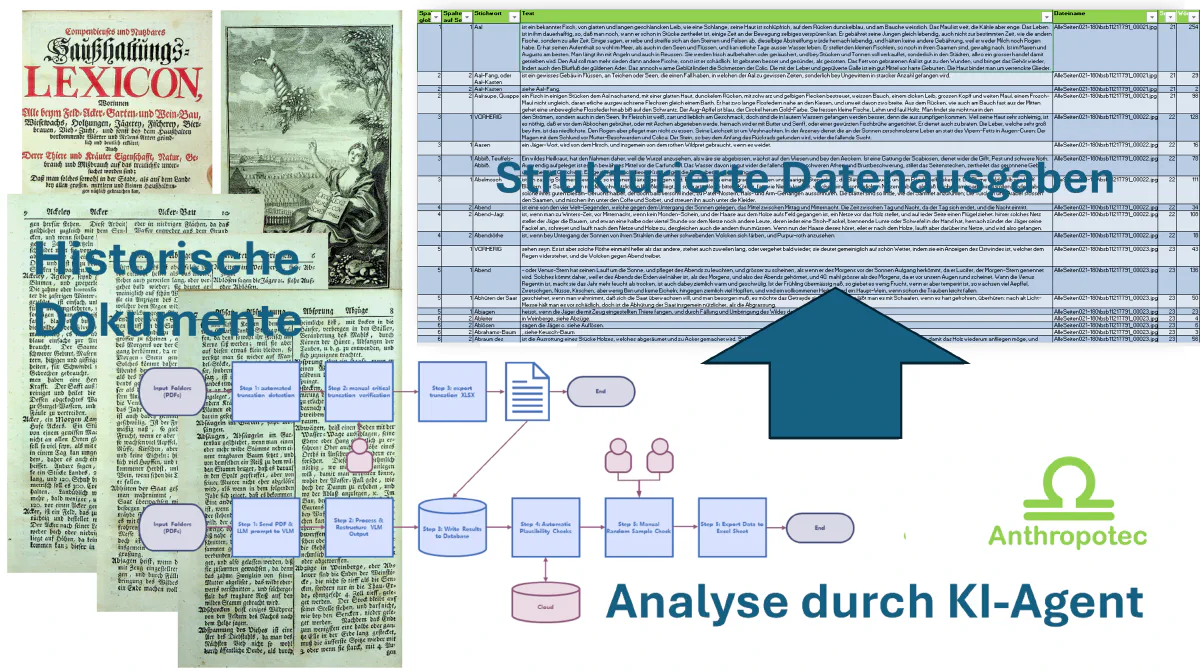
Historical printed works are a rich source for the history of our region – but set in Fraktur type, densely printed and without modern structure, they are hard for researchers to access. Together with the Chemnitz History Society and FusionSystems GmbH, we are testing how large language models and vision language models can read such works, structure them and make them available as searchable data.

LLMVLMHistorical researchData processing

View project →

ongoing Visual feedback in therapy systems

Visual feedback in therapy systems

Movement is key in many therapies – but motivation cannot be prescribed. The MotionComposer turns movement into music, making the joy of movement and self-efficacy tangible. Together with MotionComposer GmbH and FusionSystems GmbH, we are investigating how these principles can be transferred to vision: AI-assisted pose recognition generates visual feedback that complements or replaces sound – so that people with hearing impairments can also experience their movement as a response.

Pose recognitionVisual feedbackPerception channelsAccessibilityMotionComposer

View project →

ongoing Anonymising video data

Anonymising video data

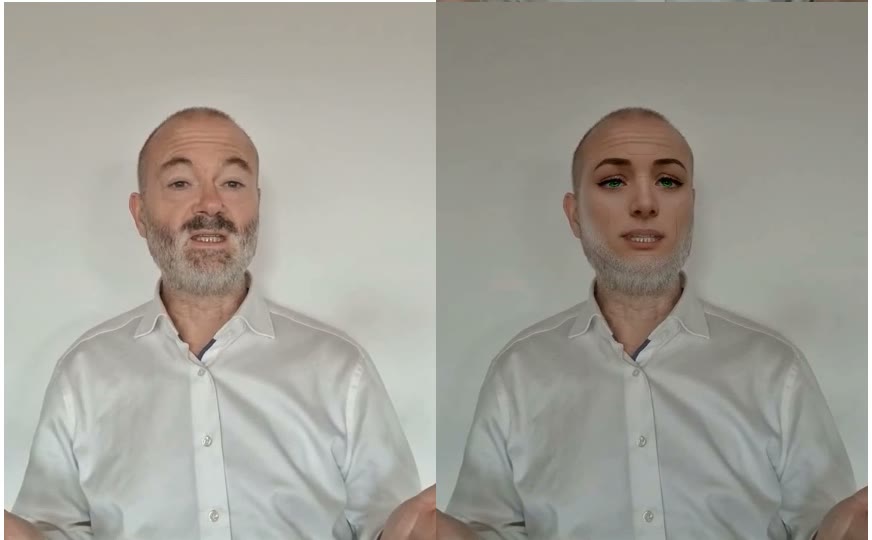
Videos of people are valuable for research and development, but a face reveals who is shown. Pixelation protects the person but destroys facial expression, gaze and lip movement: exactly what is to be studied. We are exploring another way: an AI replaces the face with a synthetic identity and transfers the recorded person's expression onto it, locally, without the cloud and in real time. Who is shown changes. What the person does is preserved.

AnonymisationData protectionVideo dataFacial expressionSynthetic identitiesReal time

View project →

ongoing

AI-based satellite data analysis

The satellites of the European Copernicus programme observe the Earth regularly and in many spectral ranges. This data is freely available – but only suitable methods make it usable for environmental monitoring and agriculture. Together with FusionSystems GmbH, we are developing building blocks of an AI pipeline that evaluates multispectral Sentinel-2 data – tested on examples from our region such as the Chemnitz district of Adelsberg.

CopernicusSatellite dataMachine learningEnvironmental monitoring

View project →

ongoing

Fuzzy hazard assessment for driver assistance

A vehicle with environment sensors continuously measures the distances and speeds of the vehicles around it. From these, a single, understandable figure is to be derived: how dangerous is the situation right now, and which vehicles are responsible? A rule-based fuzzy system translates the knowledge of experienced drivers into readable if-then rules. For every hazard value, it can be stated which rule and which vehicles caused it.

Fuzzy logicDriver assistanceExplainable AIRule-based systemsTraffic simulation

View project →

Any questions?

Interested in working with us or would you like to learn more about our research? We look forward to hearing from you.

Get in touch →